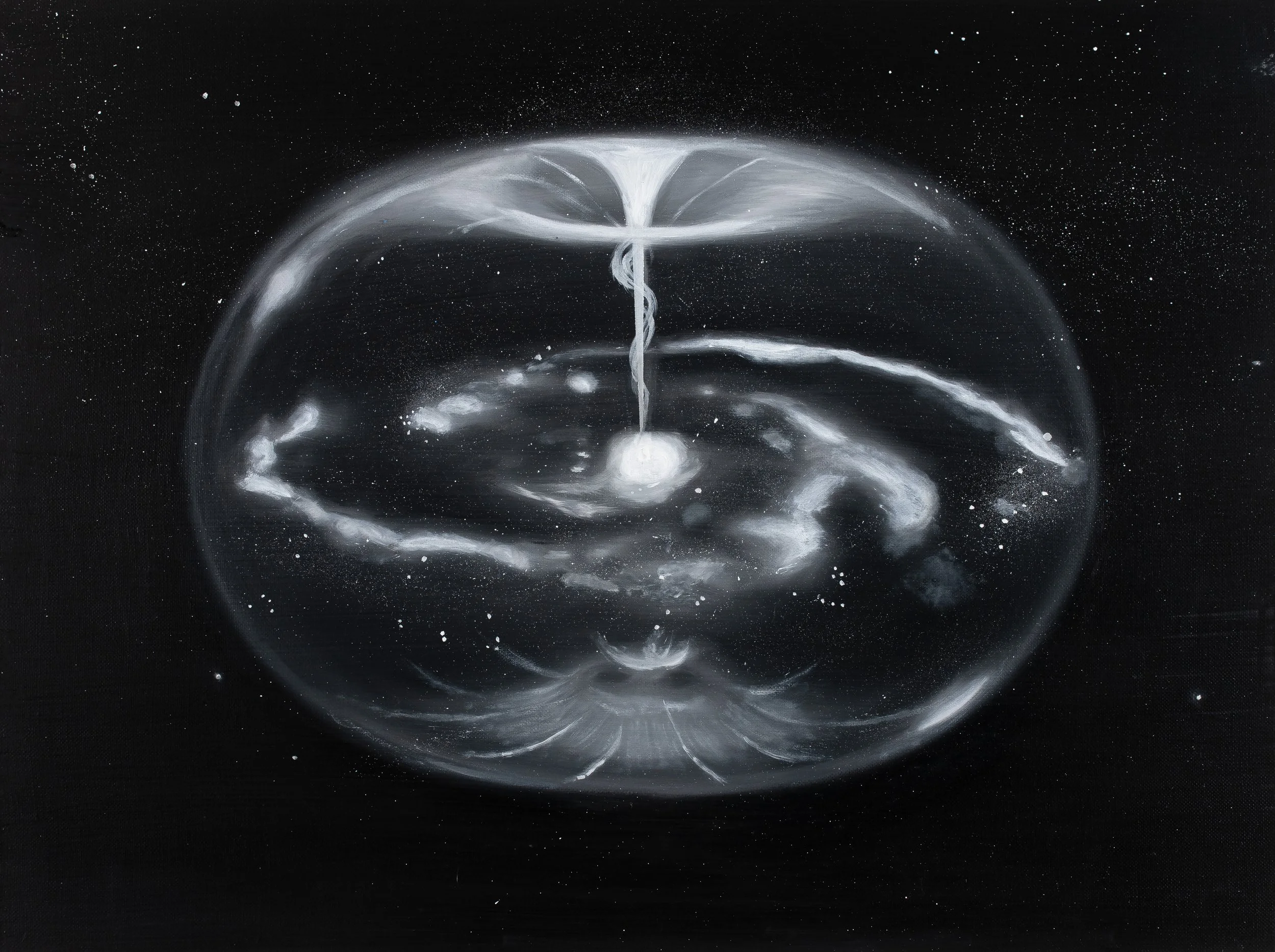
Torus, 2020

Torus, 2020
Oil on linen
46 x 61 cm (18 x 24 inches)
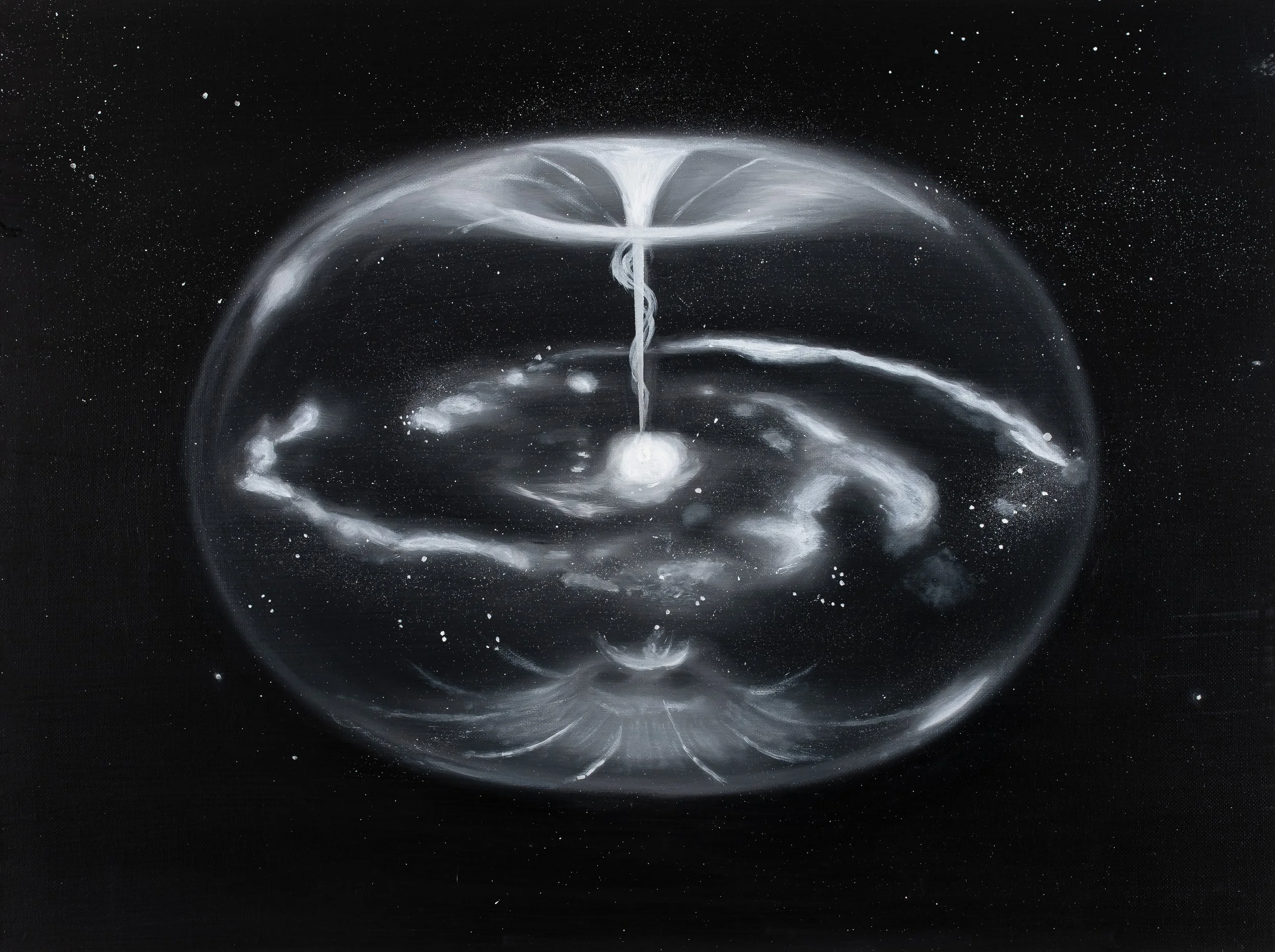
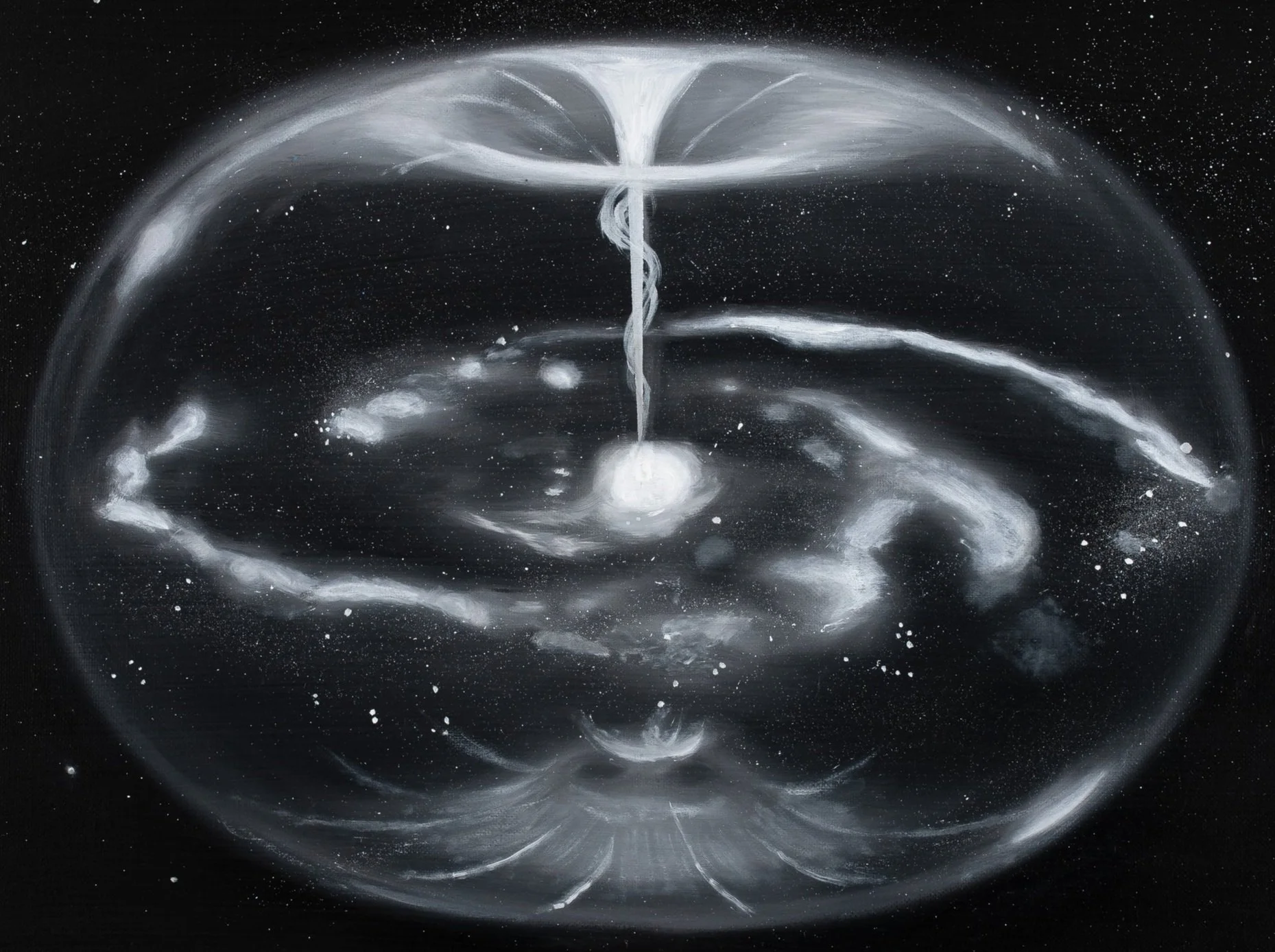
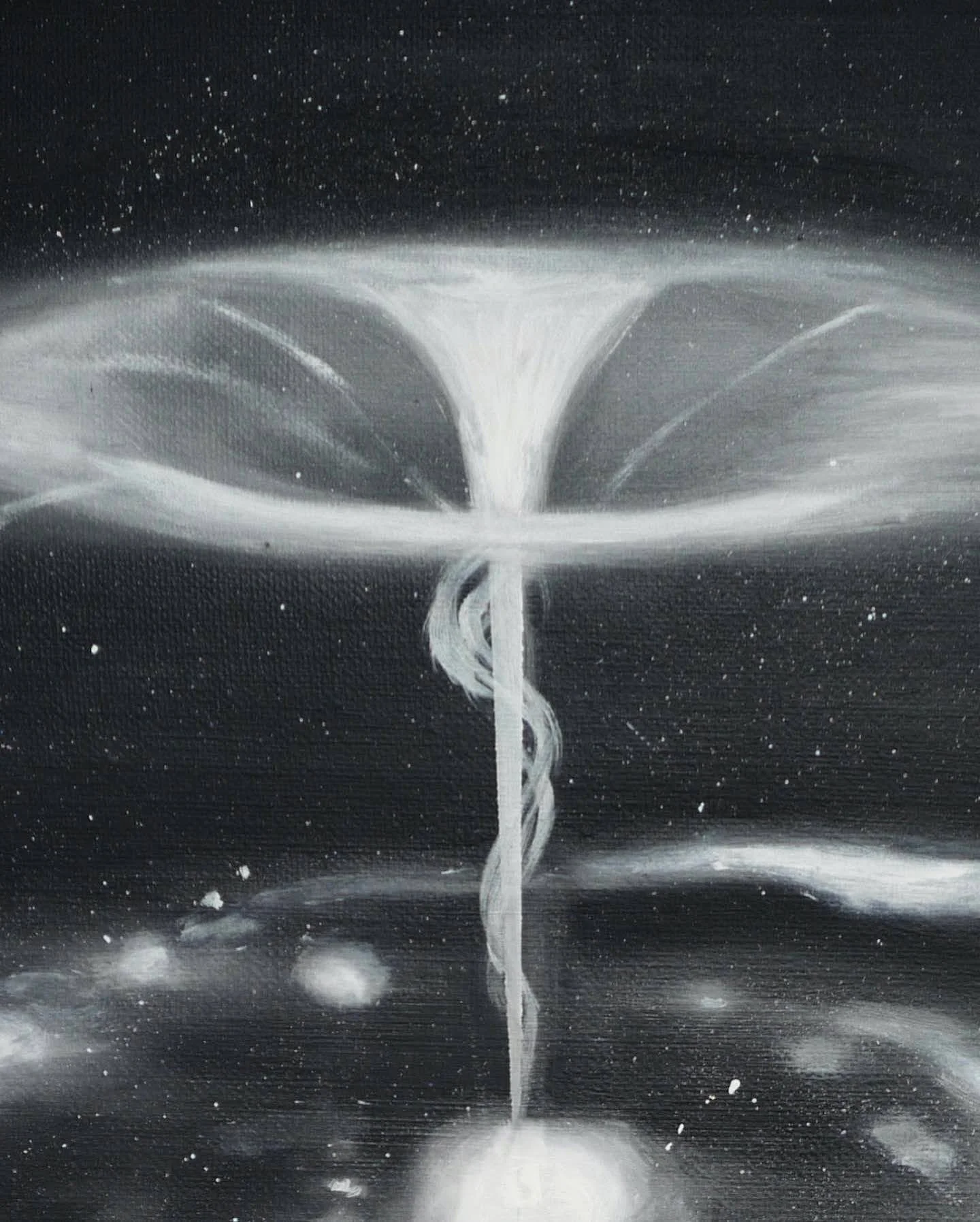
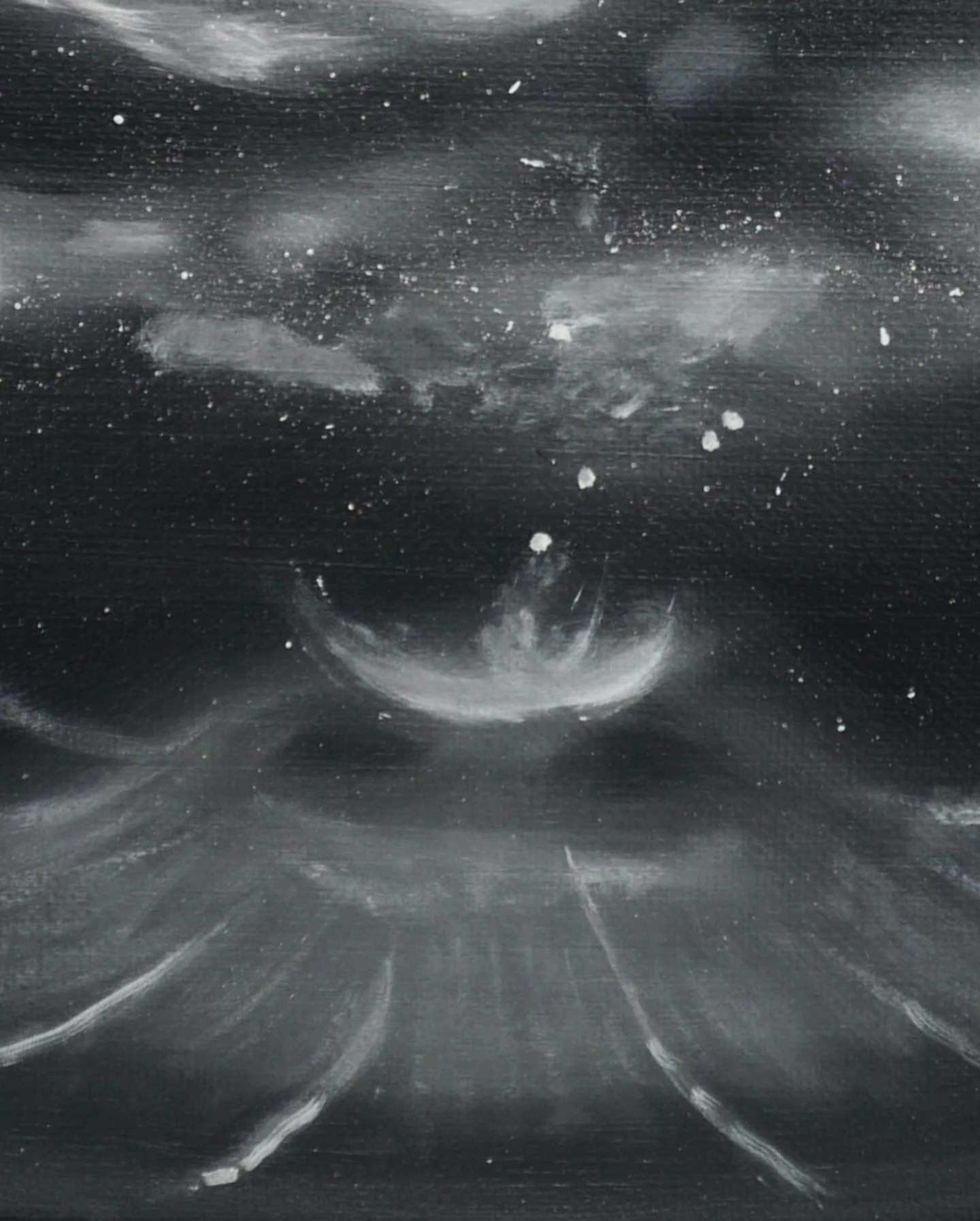
Every atom on Earth is part of the torus, a self-sustaining energy system essential to life and power. Composed of two converging vortices, the torus forms a loop where energy spirals inward, moves along the axis, exits through the opposite vortex, and returns to its origin, symbolizing interconnectedness. Nature's most awe-inspiring phenomena—tornadoes, whirlpools, black holes, magnetic fields, and planetary atmospheres—all exhibit this form. The Earth’s own torus sustains its atmosphere, circulating through its core and enveloping the surface in protection. This shape extends beyond celestial bodies, reflected in the energy fields surrounding humans and plants, linking all living beings to the universe's rhythms. In this painting, the torus appears as a cosmic lens—transparent and spherical—encapsulating swirling galaxies, cascading light, and a central pulse of energy. The surrounding ethereal black void amplifies its luminosity, evoking both infinite expansion and intimate containment. Through the interplay of form and light, the torus transcends a scientific principle, becoming a symbol of creation, regeneration, and the boundless cycles that govern existence.
Q: What inspired you to create Torus (2020) and Torus (2021)?
Tan Mu: Torus emerged after my exploration of mathematical aesthetics in works such as Fractal (2019) and Atom (2020). In those pieces, I focused on fractals and ideas of self-similarity and infinite complexity. With Torus, I continued this investigation by turning to the topology of the torus, which I see as a fundamental mathematical form that reflects the structure of the universe.
The torus represents patterns of energy circulation, continuity, and infinity that appear throughout nature, from chemical reactions and energy trajectories to the forms of embryos, bacteria, and clouds. For me, mathematics is not purely abstract. It carries a strong aesthetic and philosophical presence. As digitization accelerates and reshapes how we perceive the world, I feel a need to respond to these changes through art. Mathematics becomes both a conceptual foundation and a way to reconnect with balance and continuity in an increasingly fragmented environment. This nature-based aesthetic functions as a form of meditation and a way to restore a sense of harmony in daily life.
Q: Why did you choose a black-and-white visual language to depict the topological structure of the torus?
Tan Mu: I deliberately chose a monochrome black-and-white approach instead of using technical rendering methods, data-driven imagery, or pseudo-color systems commonly found in scientific visualization. Black and white allows the form of the torus to appear more directly and objectively. By removing color, I eliminate sensory distractions and guide attention toward structure, shape, and the flow of energy within the form.
The contrast between black and white creates visual tension and highlights the torus’s transparency and rotational movement. This approach aligns with my broader artistic philosophy of observing and interpreting the essence of our time while maintaining a meditative relationship with nature. The restraint and simplicity of monochrome imagery resonate with the cosmic principles I am exploring, offering viewers a contemplative entry point into ideas of infinity and continuity.
Q: Why did you choose to depict Torus (2020) with such a dense accumulation of points?
Tan Mu: My interest in points as a visual language comes from their dual nature. They are both formally aesthetic and symbolically charged. In Torus (2020), the accumulation of points evokes shimmering stars or bioluminescent organisms deep in the ocean. Together, they create a vibrating texture that emphasizes the torus’s transparency and rotational energy, while also suggesting movement and connection.
This approach is consistent with my broader practice. In works such as No Signal (2019) and the Signal series (2024), each point is carefully placed and calculated to represent information, pixels, or noise. Points become a metaphor for universal connectivity, extending beyond their immediate visual role. In Torus (2020), they act as indicators of energy flow and structural resonance, reflecting my ongoing interest in how visual symbols and data can shift meaning across different systems and contexts.